Advancing Discovery, Honoring Legacy
Gordon H. Sato Endowed Junior Faculty Fellowship in Biological Sciences

In 2015, with the help of a community of generous donors and a one-to-one match from the School of Biological Sciences, the family of Gordon Sato established the Gordon H. Sato Endowed Junior Faculty Fellowship in Biological Sciences. In honor of Professor Sato’s remarkable life and contributions to knowledge in cell biology, cancer research and sustainable food production, this endowed fellowship provides critical resources in perpetuity for teaching and research in the biological sciences.
Gordon Sato’s father was a Japanese immigrant. At the start of World War II, the family was forcibly incarcerated at the remote, military-style Manzanar Internment Camp in the Owens Valley, California. Sato went on to earn a PhD in Biophysics at Caltech and served as a professor at UC San Diego from 1969 to 1983. The following year, he was elected to the National Academy of Sciences. His life’s work included the development and dissemination of mangrove forest-based aquaculture that could provide food and income for less-developed countries. This was particularly successful in Eritrea, where approximately one million mangroves were planted in desert coastlines, allowing villages to prosper in a country with little arable land and turning otherwise sterile intertidal regions into productive ecosystems.
In 2018, after Sato’s passing, Professor Elsa Cleland was appointed inaugural holder of the fellowship. Cleland exemplifies how this endowed fund fulfills its mission of teaching, research and service through her support of her students. Second-year PhD researcher Julia Bebout’s work in plant community ecology continues the kind of innovative biological research Sato championed.
Cleland shares this about Bebout’s research: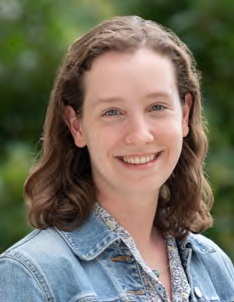
“Julia’s research focuses on the concept of ‘plasticity.’ If you take two identical plants, one growing in the shade will develop thinner, larger leaves compared to the one growing in the sun. This is a ‘plastic’ response to the environment, and very common for a variety of plant traits. Julia’s research asks whether plastic responses allow many different species to co-exist in nature. Her results so far show that a plant’s plasticity is highly dependent on the species identity of its neighbor, tantalizingly suggesting that plasticity may indeed be an important factor promoting co-existence in diverse natural plant communities.”
Cleland has been able to support Julia over the next three years of her doctoral study by combining grant funds and generous funding from the Sato fellowship. This demonstrates the significance of private funding in maintaining the continuity of research programs, and as Cleland says, “giving fantastic young scholars the opportunity to pursue creative research.”


